Author Archives: BIeditor

Breast Implant Associated-Anaplastic Large Cell Lymphoma (BIA-ALCL)

What is BIA-ALCL?

Anaplastic Large Cell Lymphoma (ALCL) is a rare form of cancer of the immune system. Experts now agree that women with breast implants are more likely to develop ALCL1. Since it will develop in the breast area, it is called Breast Implant Associated-ALCL (BIA-ALCL). Usually, this cancer develops in the scar tissue (capsule) that forms around a breast implant2. Sometimes this cancer can be found in the lymph nodes. If it’s not treated quickly, it can be fatal.

How can breast implants cause cancer?

Scientists are trying to figure out why ALCL forms near breast implants. Many experts believe that cancer may develop in response to chronic inflammation caused by bacteria3. Most cases of BIA-ALCL have been reported in women with textured implants, which provide a better surface for bacteria to grow.

Is BIA-ALCL really rare?

The U.S. Food and Drug Administration (FDA) says that it has received 359 reports of ALCL, including 9 deaths, in women with breast implants. They say that since millions of women have breast implants, BIA-ALCL must be very rare. However, the Australian version of the FDA (called the Therapeutic Goods Administration) estimates that between 1 in 1,000 and 1 in 10,000 women with breast implants will develop ALCL4.

More than 300,000 women get breast implant surgery every year. If the Australian estimates are correct, about 30-300 of those women will develop ALCL every year. However, many experts believe that ALCL is underreported and therefore the chance of developing ALCL from breast implants is likely higher than the current estimates. Although awareness of BIA-ALCL is increasing, many doctors are still unaware of the risks and symptoms.

How will I know if I have BIA-ALCL?

All women with breast implants should be seeing a doctor regularly to check for any problems. If you experience redness or swelling near your implants you should see a doctor immediately. A swollen breast is usually an infection, but the fluid around your implants should be tested for ALCL as well.

Although a swollen breast is the most common symptom of BIA-ALCL, not all women with BIA-ALCL have noticeable swelling. Some women with BIA-ALCL reported feeling a lump near their implant or capsular contracture. If you find a lump, see your doctor immediately to check for breast cancer or ALCL. If you have capsular contracture, keep in mind that it could be a sign of BIA-ALCL, even though it probably isn’t.

How can I prevent BIA-ALCL?

You can’t prevent ALCL if you have breast implants. However, you can watch out for warning signs mentioned and have regular checkups with a doctor who knows about BIA-ALCL and other risks associated with breast implants.

What is the treatment for BIA-ALCL?

ALCL is treated by removing the implant and all of the surrounding scar tissue. This procedure is called a total capsulectomy, or an “en bloc” removal. This is done to make sure any cancer cells in the tissue are removed.

If any of your lymph nodes are found to have ALCL, they will also be removed.

If the cancer is found later and has spread, you may need to be treated with chemotherapy or radiation therapy.

All articles are reviewed and approved by Dr. Diana Zuckerman and other senior staff.

References

  1. FDA, Center for Devices and Radiological Health. (2017). Breast Implants – Breast Implant-Associated Anaplastic Large Cell Lymphoma (BIA-ALCL). Retrieved from https://www.fda.gov/MedicalDevices/ProductsandMedicalProcedures/ImplantsandProsthetics/BreastImplants/ucm239995.htm
  2.  Swerdlow, S. H., Campo, E., Pileri, S. A., Harris, N. L., Stein, H., Siebert, R., et al. (2016). The 2016 revision of the World Health Organization classification of lymphoid neoplasms. Blood, 127, 2375-2390. doi:10.1182/blood-2016-01-643569
  3.  Kadin, M. E., Deva, A., Xu, H., Morgan, J., Khare, P., Macleod, R. A., Epstein, A. L., et al. (2016). Biomarkers Provide Clues to Early Events in the Pathogenesis of Breast Implant-Associated Anaplastic Large Cell Lymphoma. Aesthetic Surgery Journal, 36(7), 773-781. doi:10.1093/asj/sjw023
  4. Therapeutic Goods Administration. (2017). Breast implants and anaplastic large cell lymphoma. Retrieved from https://www.tga.gov.au/alert/breast-implants-and-anaplastic-large-cell-lymphoma
What to Ask Your Plastic Surgeon

Sometimes it’s hard to know what questions to ask and who to ask. Here are some important questions to ask a board-certified plastic surgeon if you’re seriously considering breast implants:

  • If your doctor shows before and after photographs of patients, ask if these were their own patients.
  • Ask to see photographs of his or her patients, and including how they looked a few years later.
  • Ask your doctor for written information about the risks of breast implants and read that information at least one week before surgery so you have time to ask questions and gather more information.
  • Ask for the informed consent form at least one week before surgery.
  • If there is a warranty on the implants, what is included? What isn’t included?
  • Ask whether the doctor will remove your implants for free if you have serious problems. If so, will the surgical center services also be free? What if you want them removed, but the doctor doesn’t think it is necessary?

If you are still unsure about getting breast implants, seek advice from someone that has gone through breast implant surgery at least 5 -10 years ago. They may be able to help you make the decision that is best for you. Click here to read some personal stories from women who had breast implants.

All articles are reviewed and approved by Dr. Diana Zuckerman and other senior staff.

Medicare Breast Implant Removal Policies by State

Click on your state (or territory) below to see it’s official Medicare policy on breast implant removal.

If your state isn’t listed, it doesn’t have its own policy. You can look at this policy, which is usually borrowed by states that don’t have their own policy.  

Alaska

American Samoa

Arizona

Arkansas

California

Colorado

Delaware

District of Columbia

Guam


Hawaii

Idaho

Indiana

Iowa

Kansas

Louisiana

Maryland

Michigan

Mississippi

Missouri

Montana

Nebraska

Nevada

New Jersey

New Mexico

North Carolina

North Dakota

Northern Mariana Islands

Oklahoma

Oregon

Pennsylvania

South Carolina

South Dakota

Texas

Utah

Virginia

Washington
Wyoming

West Virginia

Breast Implants and Cancer of the Immune System (ALCL): A History of Who Knew What When

by Maura Duffy and Diana Zuckerman, PhD

Experts now agree that breast implants can cause a type of cancer of the immune system. The Food and Drug Administration (FDA) finally admitted this risk of cancer in 20171, but other experts – including plastic surgeons – were aware of the risk years before. Why did it take so long for the FDA, the media, and women with implants to find out that choosing breast implants could increase their chances of developing a potentially fatal disease?

Anaplastic large cell lymphoma (ALCL) is a rare type of cancer of the immune system that was estimated to affect 1 in half a million women.2 It usually develops in the lymph nodes, skin, lungs, or liver. However, ALCL sometimes develops in the breast area of women with breast implants.

In 2008, Dutch researchers published a report of 11 women with breast implants and ALCL, and concluded that the implants seemed to be associated with ALCL.3 Although published in the Journal of the American Medical Association (JAMA), this information was not widely reported.

The link between ALCL and breast implants was first reported by the FDA in January of 2011. In 2013, researchers at MD Anderson Cancer Center studied 60 women with breast implants who were diagnosed with ALCL in the breast. Since ALCL was thought to be diagnosed in only 1 woman in half a million, this was much higher than would be expected.4 In 2014, the National Comprehensive Cancer Network (NCCN), a nonprofit network of cancer experts, released a worldwide oncology standard for surgeons and oncologists to test for and diagnose “breast implant associated ALCL (BIA-ALCL). In 2016, the World Health Organization (WHO) officially recognized BIA-ALCL.5

And yet, it was not until March 2017 that the FDA finally updated its website to officially report that breast implants could cause ALCL. At the time of the FDA announcement, the agency reported that they had received 359 reports of ALCL among women with breast implants. Reports to the FDA of problems from medical devices are acknowledged to be the “tip of the iceberg” since surgeons frequently do not do these online reports.

How did the women find out they had ALCL before the official announcement of BIA-ALCL was made? Most of them approached their doctors with symptoms such as pain, lumps, swelling, or asymmetry in their breasts years after getting implants. Since breast implants are a “foreign body,” the body forms scar tissue around the implant to protect their body from this “foreign invader.” The scar tissue surrounding the implant is known as the scar capsule. It is natural for the body to form scar tissue, and the scar tissue is only a problem if it tightens or hardens around the implants, causing pain and hardness known as “capsular contracture.” Breast implant-associated ALCL is almost always found in the scar capsule surrounding the implant, not the breast tissue itself, and has been reported in women both with and without capsular contracture.6

ALCL is diagnosed by testing the fluid that collects around the implant, called a seroma.7 Seroma is usually not caused by ALCL. It is important to understand that even when ALCL is in the breast, it is not breast cancer, but rather a cancer of the immune system.  Most breast implant-associated ALCL has cancer cells within the fluid inside the scar capsule. That ALCL can be treated by removing the implant and the surrounding scar tissue. This surgery is known as a capsulectomy.

One study of nine women who had a capsulectomy after being diagnosed with breast implant-associated ALCL found that all nine were healthy and disease free when they were studied 3.5 years later, and neither chemotherapy nor radiation treatment was necessary. However, some types of ALCL are more aggressive and need to be treated with chemotherapy or radiation. 8

In December 2013, the study of 60 patients with breast implant-associated ALCL showed that the ALCL was more likely to be fatal for women who had a solid ALCL tumor than for women who had ALCL cancer cells in the surrounding fluid (known as effusion ALCL). All of the patients with effusion-type ALCL were still alive 5 years after their diagnosis, compared to only 75% of the patients with solid ALCL tumors. ALCL returned in only 14% of patients with effusion-type ALCL, compared to 50% recurrence of solid ALCL tumors.9

Longer studies with more patients are needed to determine if some kinds of breast implants are more likely to cause ALCL. Meanwhile, women with all types of implants should have routine follow-ups and should immediately see a doctor if one or both of their breasts become swollen.

For women with silicone implants, FDA recommends getting a breast coil MRI three years after getting silicone gel implants, and every two years after that.10

A statement on ALCL from Allergan, a manufacturer of both silicone and saline breast implants, said, “A woman is more likely to be struck by lightning than to get this condition.”11 However, 400 people are injured or killed by lightning every year12, which is why most people avoid situations where lightening can harm them.

In fact, the Australian version of the FDA now estimates that up to 1 in 1,000 women with breast implants will develop BIA-ALCL which is not nearly as rare as plastic surgeons and manufacturers have claimed. 13

Many women would not want to take the chance of developing cancer as a result of breast implants, and this is especially true for women who underwent mastectomies that were not medically necessary in an effort to reduce their chances of cancer returning.

In addition, the link between breast implants and autoimmune diseases has been hotly debated for two decades, with many women reporting serious autoimmune symptoms that went away when their implants were removed 14. The scientific evidence regarding ALCL and implants once again raises questions about the possible impact of breast implants on autoimmune disease or symptoms such as joint pain, body pain, memory loss, and chronic fatigue.

For many years, women with breast implants were assured by implant companies, plastic surgeons, and the FDA that breast implants did not cause breast cancer or any other type of cancer. Evidence of a link to some types of cancer and to autoimmune diseases, including studies conducted by researchers at FDA and the National Cancer Institute, was dismissed. However, as everyone knows from data on lung cancer, emphysema, and smoking, it can take decades to determine if an exposure causes cancer or other serious diseases. Even a very strong carcinogen, such as tobacco, is very unlikely to cause lung cancer for at least 30 years. For this reason, it is essential that physicians and researchers take a closer look at the link between breast implants and cancer of the immune system, as well as other immune disorders.

Breast implants after mastectomy: Risks you need to know

Diana Zuckerman, Ph.D.
Updated 2017

The complication rate for getting breast implants after mastectomy has been described by experts as “alarmingly high and arguably unacceptable,”15 even though most of the information about complications is based on studies that were paid for by companies that make breast implants or silicone.

How safe are breast implants and how many women have complications after getting reconstruction with breast implants after a mastectomy? When the Food and Drug Administration (FDA) approved breast implants, they acknowledged that the complication rate is very high for all women, especially those undergoing reconstruction after a mastectomy. What the FDA did not know, however, is that early-stage breast cancer patients that undergo mastectomy and reconstruction with breast implants are 10 times as likely to commit suicide as other early-stage breast cancer mastectomy patients.

Complications from Implants

We do not know why the suicide rate is so high for mastectomy patients with breast implants, but we do know that complications are very common. For example, a study conducted by implant manufacturer Inamed (now called Allergan) found that 46% of reconstruction patients needed additional surgery within the first 2 to 3 years after getting silicone gel breast implants 16. Not surprisingly, the implant maker did not publish an article describing this high complication rate, which was more than twice as high as the 21% reported in a study funded by a company that makes silicone (Dow Corning).1

Why was the complication rate lower in the Dow Corning study? One explanation is that the women in that study had breast implants for an average of only 23 months, compared to 2-3 years in the Inamed study. Even so, the Dow study found that 31% of the women developed at least one serious complication and 16% developed at least 2 serious complications in that short period of time. The Inamed study reported that 25% underwent implant removal, 16% experienced Baker III-IV capsular contracture (which is painful breast hardness), 6% experienced necrosis (death of breast tissue), 6% had other types of breast pain, and 6% had an implant that ruptured, and other women reported infections and other complications.2  This shows that both studies found very high complication rates despite a short follow-up of less than 3 years.

The Dow-funded study concluded that “reconstruction failure (loss of implant) is rare.” Of course, it should be rare after less than 2 years. In contrast, when Inamed used Magnetic Resonance Imaging (MRIs) to detect rupture, they found that 20% of reconstruction patients had ruptured implants by the third year;17 but very few ruptures were detected without MRIs. Since Henriksen did not use MRIs. Since the Dow Corning study did not use MRIs to detect rupture, they couldn’t accurately count the number of failed implants.  Moreover, FDA scientists concluded that the risk of rupture would likely increase exponentially every year.18

Many plastic surgeons claim that the Institute of Medicine concludes that breast implants are safe. However, the Institute of Medicine report was completed in 1999, years before most research was conducted. Most research on breast implant patients was published after 1999, making the report very outdated. Many of the studies reported higher levels of diseases or symptoms among women with breast implants, which would have reached statistical significance if the studies were larger and women were followed for a longer period of time.

Can implants cause cancer or other serious diseases?

Experts around the world now agree that breast implants can cause a type of cancer of the immune system called ALCL (anaplastic large cell lymphoma).  In fact, there is now a specific diagnosis called breast implant associated ALCL (BIA-ALCL).  If caught early, removal of the breast implants can be very effective, but if not treated quickly it can be fatal. 19

The link between breast implants and other cancers remains controversial.  Studies paid for by plastic surgeons or implant companies tend to conclude that breast implants are safe. Since breast implants can cause cancer of the immune system, it seems logical that implants might have an impact on other diseases of the immune system or other cancers.  For example, FDA scientists reported a significant increase in fibromyalgia and several other autoimmune diseases among women whose silicone gel breast implants were leaking, compared to women with silicone implants that were not leaking outside the scar tissue capsule.4 In addition, scientists at the National Cancer Institute (NCI) found a doubling of deaths from brain cancer, lung cancer, and suicides among women with breast implants compared to other plastic surgery patients.20 National Cancer Institute scientists concluded that more research was needed to determine if implants increase the risk of cancer or autoimmune diseases.5,6

The Bottom Line

Many women choose mastectomies to “get rid of the cancer once and for all” hoping that it is the safest strategy for dealing with breast cancer.  However, research shows that women who have lumpectomies live longer than women with the same diagnoses that chose mastectomies instead. Research makes it clear that there are many complications from breast implants that often keep women needing additional surgery and medical help in the years after breast cancer is removed, including the possibility of cancer of the immune system.  Unfortunately, many women tell us that their doctors did not warn them about these risks. [Read a New York Times article about a woman with ALCL here.]

Some of the information from this article was based on Dr. Zuckerman’s article published in Archives of Surgery, Vol 141, pages 714-715. The original article can be found here.

How Obamacare can help women with breast implant problems!

For years we have heard from women with leaking breast implants and other serious implant problems who want to get their implants removed but can’t afford it.  Breast cancer patients who have health insurance have been covered but augmentation patients have not.  And, breast cancer patients who couldn’t afford health insurance (and there are many) were also out of luck.  Many women who have been in this situation or might be in the future will find that Obamacare is a great help! We encourage women to take advantage of the law while it is still in place, because it might be repealed or substantially changed in the future.

  • Under Obamacare, health insurance companies can’t refuse to pay for health problems related to a pre-existing condition.  Before Obamacare (the Affordable Care Act), many insurance companies considered breast implants a pre-existing condition.  Under Obamacare, insurance companies are generally required to pay for services that are medically necessary, even if the reason for the health problem is a pre-existing condition.  However, some insurance companies may try to exclude any services related to complications from cosmetic surgery, so read the policies carefully before you choose.
    • California, Florida, Massachusetts, New York, North Carolina, Texas, and Washington tend to be especially good about coverage for medically necessary services, even those related to previous cosmetic surgery. Medically necessary services usually include removal of leaking silicone gel breast implants, as well as removal of implants causing severe capsular contracture, serious infections, chronic pain, ALCL (a rare cancer of the immune system), or other serious health problems that a doctor says are caused by implants.
  • The State Insurance Exchanges offer health insurance policies that will be better and more affordable than most policies available to individuals who aren’t insured through their workplace.  It is important to go to www.healthcare.gov and look into the plans offered on your state’s Exchange. If you have lost an existing health insurance policy because of a change in marital status or job or other reasons, you can sign up for the exchange now – otherwise, the only time to sign up is between November 1 and December 15, you can get coverage starting January 1, 2018.  You will find pricing information for 2018 on the website. The lower your income, the less you will have to pay for these health insurance policies.  Check out the choices you have in your state on www.healthcare.gov and sign up as soon as you decide and definitely before Dec. 15, 2017 if you want to start your health insurance on January 1.  And make your appointment now for January surgery, if you need it!
  • To make sure that the policy you plan to buy includes implant removal or other coverage for the kind of implant problems you have, ask that question BEFORE you buy the policy.  If they can’t answer your question or tell you it would not be covered, please contact us immediately at info@center4research.org.  We will do our best to help.
  • In many states, Medicaid is available for free to any individual or family under 133% of the poverty line (that’s about $30,000/year for a family of 4).  Medicaid must provide coverage for pre-existing conditions and so it should include surgery or services that a doctor considers medically necessary, such as removing leaking silicone gel breast implants, implants causing chronic pain or infections, and other serious health problems.   If you are on Medicaid or Medicare and have problems getting this coverage, please contact us immediately at info@center4research.org .


Woman with Rare Cancer Linked to Breast Implants Seeks to Spread Awareness

CBS News, July 13, 2017

Some women get breast implants as part of reconstruction after breast cancer. Others do it to feel more confident.

The American Society of Plastic Surgeons says around 550,000 women last year received breast implants, but the FDA published a report this year linking a rare cancer to the implants.

So far, there have been 359 reported cases globally, including nine deaths.

The risk is low, but one in 30,000 women with implants could develop it, including one patient who says she is battling the disease and her insurance company, reports CBS News correspondent Anna Werner.

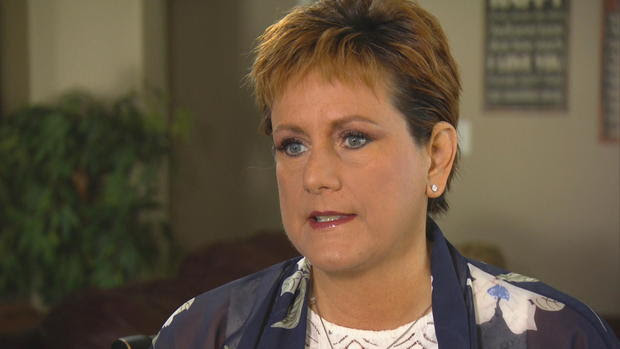
Kimra Rogers was shocked to find a tumor under her arm.

“I could feel a mass that was the size of an egg, it was an egg to a lemon, it was very large,” Rogers said.

Then she learned it was cancer, possibly connected to the cosmetic breast implants she’d had put in 17 yearsago.

“I was never informed that I could possibly get cancer. Basically they said they’re 100 percent safe,” Rogers said.

breast-implant-cancer-roers.jpg

Kimra Rogers. (photo: CBS News)

It’s called breast implant-associated anaplastic large-cell lymphoma, a rare cancer the FDA says can develop following breast implants, something doctors at MD Anderson Cancer Center in Houston have been studying for five years.

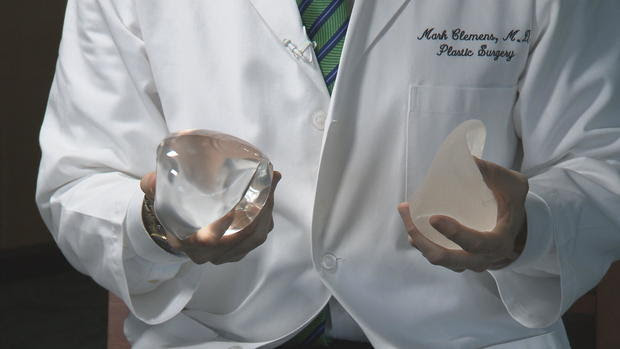
“This is a type of lymphoma. It is not a breast cancer. It’s actually a cancer that develops in the scar tissue around a breast implant,” said Dr. Mark Clemens.

Breast implants come with either a smooth or a textured outer surface. Surgeons sometimes use these rougher textured implants to limit the movement of a breast implant.

Even though just about 15 percent of implants used in the U.S. are textured, the FDA says most of the women who developed the lymphoma – 203 of 231 cases that identified the type of surface – received the textured implants.

“We see that it’s most commonly occurring around a textured implant,” Clemens said. “So we know that something that’s triggering the lymphoma is a chronic long-lasting inflammatory state you can almost think of it as akin to an allergic reaction in these patients. But it stimulates part of the immune system and in certain genetically susceptible patients, develops into a lymphoma.”

There are three breast implant manufacturers in the U.S.

dr-clemens-implants-in-hand.jpg

Dr. Mark Clemens shows the difference between textured and non-textured implants. (photo: CBS News)

Rosalyn d’Incelli is with manufacturer Sientra.

Asked about how big the problem, PR or otherwise, could be for breast implant manufacturers, d’Incelli said, “We are taking it very seriously and want to make sure that there’s education.”

In particular, telling doctors and patients that the cancer has a high-cure rate, often simply with taking the implants out.

“In addition to it being rare, it’s also very treatable as long as it’s caught and the implants are removed,” d’Incelli said.

The risk is low, but national cancer treatment guidelines say any woman who does get the lymphoma should have her implants removed as soon as possible.

But insurance companies don’t always agree to pay. Rogers says her insurer, Blue Cross Blue Shield of Montana, denied payment for removal of her implants three times, telling her it was a contract exclusion because her implants were cosmetic.

“I was furious because the first line of defense is to remove the source, the source was still in my body,” Rogers said.

Rogers says after repeated appeals, the company finally agreed to cover removal, but not reconstruction.

The insurer told CBS News in a statement they “do not generally cover cosmetic procedures” but that for this type of lymphoma, they “do cover medically necessary cancer treatments, including removal of implants, chemotherapy and radiation.”  The company would not comment on what happened in Rogers’ case. […]

Why some women are ditching breast implants

But Dr. Clemens said, “We can’t wait months or years till an insurance company say, ‘okay, we’re gonna cover it.'”

Asked if women’s lives are at risk, Dr. Clemens responded, “That’s correct.”

Rogers says she’s continuing to fight for full insurance coverage for other women.

“I want to be a precedent. I want to be the leader of the pack for all of the women that are behind me. I want them not to do this battle that I’m doing,” Rogers said.

Rogers says the cost of removal and reconstruction is estimated at $9,000 to $12,000.

As for the other two manufacturers, Mentor told CBS News, “Long-term data support the safety and efficacy” of its products.

Allergan says it provides “information regarding the risks” of lymphoma in its patient labeling and works to help bring awareness.

Rogers won’t know who made hers until they are removed, but Sientra did confirm that Rogers’ are not Sientra implants.

The key advice for women who have breast implants here is — again, this is rare.

But if you notice any changes in the implants or your breasts, such as swelling, head to your doctor’s office as soon as possible to have any problems checked out.

Read the original article here.

Why Are So Many American Women Having Mastectomies?

Diana Zuckerman, PhD, and Megan Polanin, PhD, National Center for Health Research, Our Bodies Ourselves: June 15, 2017

When Angelina Jolie publicly announced her double mastectomy four years ago, she was praised for possibly saving many women’s lives. But we know more today than we did then and experts now agree that too many women are undergoing unnecessary mastectomies – even some women with the “breast cancer genes.”  You’ll be surprised by what we’ve learned.

A 2007 review of 10 studies found that the risk of getting breast cancer for an average woman with BRCA1 is 57%. The risk is 49% for a woman with BRCA2. Although frightening, this is far from the inevitable breast cancer diagnosis that many women expect. And, keep in mind that the lifetime risk of breast cancer is very different from the risk of getting breast cancer in the next 10 years or even 20 years. According to experts, a 40-year-old woman with the BRCA1 gene has a 14% chance of getting breast cancer before she turns 50. We’re willing to bet that is a much lower risk than most women assume. With regular screening and all the progress in breast cancer treatments, the survival rate from breast cancer is higher than ever. Many breast cancer patients live long and healthy lives.

Most women are diagnosed with breast cancer at early stages, making it safe to undergo a lumpectomy (which removes just the cancer) rather than a mastectomy (which removes the entire breast). Yet American women are undergoing mastectomies at a higher rate than women in other countries, including prophylactic mastectomies. Breast cancer experts believe that many women undergoing mastectomies do not need them and are getting them out of fear, not because of the actual risks.

For many years, experts have known that women who undergo mastectomies for the non-invasive condition called ductal carcinoma in situ (DCIS) or for early-stage breast cancer do not live longer than women undergoing lumpectomies. However, the latest research goes a step further:  A 2016 study of more than 37,000 women with early-stage breast cancer found that the women undergoing lumpectomies were more likely to be alive 10 years later than women with the same diagnosis who underwent a single or bilateral (double) mastectomy. They were also less likely to have died of breast cancer. In 2016, Harvard cancer surgeon Dr. Mehra Golshan reported that of almost half a million women with breast cancer in one breast, those undergoing double mastectomies did not live longer than women undergoing a mastectomy in only one breast. These are just the latest studies – for more information about the years of consistent evidence that less radical surgery is better, see this article.

And yet, an increasing number of U.S. women with early-stage breast cancer are choosing to have both their breasts removed “just to be safe.” A 2015 study conducted by researchers at Vanderbilt University reported that, for women diagnosed with early-stage breast cancer in one breast, the rates of double mastectomy increased from 2% to 11% from 1998 to 2011. Researchers found that decisions to have a double mastectomy increased more for two groups of women: 1) Women with ductal carcinoma in situ (DCIS) where there are abnormal cells inside a milk duct in the breast that won’t spread and aren’t dangerous unless breast cancer develops later; and 2) Women with cancer only in one breast that has not spread to the lymph nodes. This year, researchers from Emory University reported that the percentage of women over 45 getting double mastectomies for early-stage breast cancer in one breast increased from 4% to 10% in less than a decade. For women ages 20-44, the percentage tripled from 11% to 33%. To some extent, geography was destiny: in five Midwestern states (Nebraska, Missouri, Colorado, Iowa, and South Dakota), 42% of the women who got surgery had a double mastectomy.

The bottom line is that women with DCIS or early-stage breast cancer have more effective and less radical treatment options than mastectomy. Even women with BRCA1 or BRCA2 may never develop breast cancer, and if they do, they may not need a mastectomy. We need to stop thinking of mastectomy as the “brave” choice and understand that the risks and benefits of mastectomy are different for every woman with cancer or the risk of cancer. In breast cancer, any reasonable treatment choice is the brave choice.

So, the good news for women newly diagnosed with cancer is that mastectomies are not the best choice for most women if they want to live longer. Women should be aware of treatment choices for breast cancer and encouraged to make decisions based on their own unique situations. For each woman, it is important to weigh her own risk of cancer — in the next few years, and not just over her lifetime – and the risks of various treatments. Each woman should make the decision that is best for her, based on information, not on fear.

See the original blog post here

Are Mastectomies Necessary for Women with BRCA1 or BRCA2? What About for Women Without the Breast Cancer Gene?

Diana Zuckerman, PhD, and Megan Polanin, PhD, National Center for Health Research

When Angelina Jolie publicly announced her double mastectomy in 2013, she was praised for possibly saving many women’s lives. But we know more today than we did then and experts now agree that too many women are undergoing unnecessary mastectomies. Here are the facts.
A review of 10 studies found that the risk of getting breast cancer for an average woman with BRCA1 is 57%. The risk is 49% for a woman with BRCA2.[1] Keep in mind that for younger women, the lifetime risk of breast cancer is very different from the risk of getting breast cancer in the next 10 years or even 20 years. According to experts, a 40-year-old woman with the BRCA1 gene has a 14% chance of getting breast cancer before she turns 50.[2] That is not nearly as frightening, and with regular screening and all the progress in breast cancer treatments, the survival rate from breast cancer is higher than ever. Many breast cancer patients live long and healthy lives.
Most women are diagnosed with breast cancer at early stages, making it safe to undergo a lumpectomy (which removes just the cancer) rather than a mastectomy (which removes the entire breast). Yet American women are undergoing prophylactic mastectomies at a higher rate than women in other countries — many of them medically unnecessary.[3] Breast cancer experts believe that many women undergoing mastectomies do not need them and are getting them out of fear, not because of the actual risks.
In recent years, we have seen an increase in women with early-stage breast cancer choosing to get a double mastectomy. For example, a 2015 study conducted by researchers at Vanderbilt University reported that, for women diagnosed with early-stage breast cancer in one breast, the rates of double mastectomy increased from 2% to 11% from 1998 to 2011.[4] Researchers found that decisions to have a double mastectomy increased more for two groups of women: 1) Women with ductal carcinoma in situ (DCIS) where there are abnormal cells inside a milk duct in the breast that won’t spread and aren’t dangerous and 2) Women with cancer only in the breast that has not spread to the lymph nodes.
This year, researchers from Emory University and colleagues published a study focused on women diagnosed with early-state breast cancer in one breast.[5] They found that, from 2004 to 2012, the percentage of these women 45 years or older who got double mastectomies more than doubled from 4% to 10%. For women ages 20-44, the percentage tripled from 11% to 33%. Researchers found that it mattered where women lived in the United States. For example, in five Midwestern states (Nebraska, Missouri, Colorado, Iowa, and South Dakota), 42% of the women who got surgery decided to get a double mastectomy.
For many years, experts have known that women who undergo lumpectomies for a non-invasive condition called ductal carcinoma in situ (DCIS) or for early-stage breast cancer live just as long as women undergoing mastectomies. However, the latest research goes a step further: a study conducted in the Netherlands of more than 37,000 women with early-stage breast cancer found that the women undergoing lumpectomies were more likely to be alive 10 years later than women with the same diagnosis who underwent a single or double mastectomy.[7] They were also less likely to have died of breast cancer.
In 2016, Harvard cancer surgeon Dr. Mehra Golshan published a study of almost half a million women with breast cancer in one breast. She reported that those undergoing double mastectomies did not live longer than women undergoing a mastectomy in only one breast.[6]
These are just the most recent studies. For more information about the many studies that show the benefits of less radical surgery, see this article.
The bottom line is that women with DCIS or early-stage breast cancer have more effective and less radical treatment options than mastectomy. We need to stop thinking of mastectomy as the “brave” choice and understand that the risks and benefits of mastectomy are different for every woman with cancer or the risk of cancer. In breast cancer, any reasonable treatment choice is the brave choice.
The research clearly shows that mastectomies are not the best choice for most women if they want to live longer. Women should be aware of treatment choices for breast cancer and encouraged to make decisions based on their own unique situations. For each woman, it is important to weigh her own risk of cancer — in the next few years, and not just over her lifetime – and the risks of various treatments. Each woman should make the decision that is best for her, based on the facts, not on fear.

All articles are reviewed and approved by Dr. Diana Zuckerman and other senior staff.
1. Chen, S., & Parmigiani, G. (2007). Meta-analysis of BRCA1 and BRCA2 penetrance. Journal of Clinical Oncology, 25(11), 1329-1333.
2. Chen, S., Iversen, E. S., Friebel, T., Finkelstein, D., Weber, B. L., Eisen, A., … & Corio, C. (2006). Characterization of BRCA1 and BRCA2 mutations in a large United States sample. Journal of Clinical Oncology, 24(6), 863-871.
3. Metcalfe, K. A., Birenbaum?Carmeli, D., Lubinski, J., Gronwald, J., Lynch, H., Moller, P., … & Kim?Sing, C. (2008). International variation in rates of uptake of preventive options in BRCA1 and BRCA2 mutation carriers. International journal of cancer, 122(9), 2017-2022.
4. Kummerow, K. L., Du, L., Penson, D. F., Shyr, Y., & Hooks, M. A. (2015). Nationwide trends in mastectomy for early-stage breast cancer. JAMA surgery, 150(1), 9-16.
5. Nash, R., Goodman, M., Lin, C. C., Freedman, R. A., Dominici, L. S., Ward, K., & Jemal, A. (2017). State variation in the receipt of a contralateral prophylactic mastectomy among women who received a diagnosis of invasive unilateral early-stage breast cancer in the United States, 2004-2012. JAMA surgery.
6. Wong, S. M., Freedman, R. A., Sagara, Y., Aydogan, F., Barry, W. T., & Golshan, M. (2017). Growing use of contralateral prophylactic mastectomy despite no improvement in long-term survival for invasive breast cancer. Annals of surgery, 265(3), 581-589.
7. van Maaren, M. C., de Munck, L., de Bock, G. H., Jobsen, J. J., van Dalen, T., Linn, S. C., … & Siesling, S. (2016). 10 year survival after breast-conserving surgery plus radiotherapy compared with mastectomy in early breast cancer in the Netherlands: a population-based study. The Lancet Oncology, 17(8), 1158-1170.
8. Hwang, E. S., Lichtensztajn, D. Y., Gomez, S. L., Fowble, B., & Clarke, C. A. (2013). Survival after lumpectomy and mastectomy for early stage invasive breast cancer. Cancer, 119(7), 1402-1411.
9. Kurian, A. W., Lichtensztajn, D. Y., Keegan, T. H., Nelson, D. O., Clarke, C. A., & Gomez, S. L. (2014). Use of and mortality after bilateral mastectomy compared with other surgical treatments for breast cancer in California, 1998-2011. JAMA, 312(9), 902-914.

ALCL and Breast Implants: 2017 Update

By Anna E. Mazzucco, Ph.D and Diana Zuckerman, Ph.D
Updated: March 24, 2017

In March, 2017, the U.S. Food and Drug Administration (FDA) updated its website to officially report that breast implants could cause a type of cancer of the immune system called anaplastic large cell lymphoma (ALCL).  They stated they have received 359 reports of ALCL among women with breast implants.

The FDA’s announcement came 10 months after the disease was named breast implant associated ALCL (BIA-ALCL) in a  World Health Organization publication in 2016, and a few months after the National Comprehensive Cancer Network (NCCN) released the first worldwide oncology standard for the disease.  NCCN includes a guided algorithm for surgeons and oncologists to test for and diagnose the disease.  They concluded that any abnormal accumulation of fluid or a mass that develops near the breasts months after breast implants were implanted must be evaluated.

The oncologists also state that even if the BIA-ALCL is confined to the scar capsule that surrounds the implant and even if that capsule is totally removed through proper explant surgery, the patient must be followed for 2 years.  Here is the link to their guidelines: https://www.nccn.org/professionals/physician_gls/pdf/t-cell.pdf#page17

Although rare, it seems that BIA-ALCL is not “very rare.”  In Australia, which can track medical problems from any kind of implants better than the tracking of implants in the U.S., they estimate that BIA-ALCL affects one woman per 1,000 with breast implants.  The estimates were much lower in the U.S., but there is no reason to think BIA-ALCL is less likely to develop in women in the U.S.  Given the dramatic increase in diagnoses, it is clear that BIA-ALCL was under-diagnosed and under-reported for many years.

The sooner ALCL is diagnosed, the more likely it can be treated easily and effectively by removing the implants and capsule.  At later stages, treatment includes chemo and is less likely to be successful, as specified by researchers at the well-respected MD Anderson Cancer Center in a medical journal in 2013. Their study followed women for 5 years and found that ALCL related to breast implants sometimes requires chemotherapy, and approximately 25% of the implant patients with the more serious type of ALCL died during the 5 years following their diagnosis.[1] Dr. Anna Mazzucco published a response to this study,[2] urging physicians to respond quickly and to check patients who have swelling near their implants for ALCL. This would require cytology testing rather than testing for bacteria. The authors of the original study also published a response to Dr. Mazzucco’s article, expressing similar concerns.[3]

For more information, see our summary of that study here.

ALCL caused by breast implants can result in swelling, which is often mistaken for an infection and treated with antibiotics. Antibiotics are ineffective against ALCL and the delay in timely and appropriate treatment for ALCL is dangerous.

Unfortunately, some health insurance companies have traditionally not covered the cost of medical tests or treatment for women with breast problems related to cosmetic breast implants. The published articles on ALCL clearly indicate that this can result in undetected cancer of the immune system (ALCL), which can be fatal. In addition, delays in treatment for ALCL can be extremely expensive for patients and their insurance companies; the companies would be required to pay for treatment for ALCL when it is eventually diagnosed at a later stage.

  1. Miranda RN, Aladily TN, Prince HM, et al: Breast implant–associated anaplastic large-cell lymphoma: Long-term follow-up of 60 patients. J Clin Oncol 32:114-120, 2014.
  2. Mazzucco, AE. Next Steps for Breast Implant-Associated Anaplastic Large-Cell Lymphoma. J Clin Oncol, 2014.
  3. Miranda RN. Reply to AE Mazzucco. J Clin Oncol, 2014. Early Release publication. June 16, 2014.